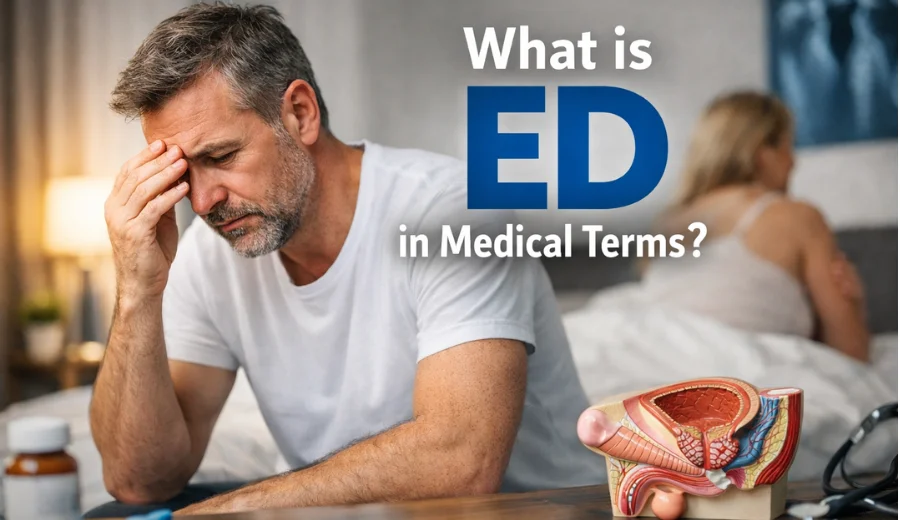
Many men hear the term “ED” but are not sure what it really means. If you have ever searched for ed in medical terms, you are not alone. Millions of men around the world deal with this condition every day, yet very few talk about it openly.
ED is more common than most people think. It affects men of all ages, though it becomes more frequent as men get older. The good news is that it is a well-understood medical condition with real, proven solutions.
In this blog, we will explain everything you need to know about ed in medical terms, including what causes it, how it affects your health and what treatment options are available to help you get back to a normal, healthy life.
ED Full Form and Medical Meaning
So, what does ed in medical terms actually stand for?
ED stands for Erectile Dysfunction. It is a medical condition in which a man is unable to get or keep an erection firm enough for sexual activity. This is not just an occasional issue. ED is diagnosed when the problem happens regularly and starts to affect a man’s confidence or relationship.
Doctors consider ED a medical condition, not a personal weakness. It is listed in medical literature as a form of male sexual dysfunction and is taken seriously by healthcare professionals worldwide.
Understanding ed in medical terms helps remove the shame around the topic and encourages men to seek the help they genuinely need.
How Erections Work? (Simple Explanation)
Before understanding what goes wrong with ed in medical terms, it helps to know how a normal erection works.
When a man becomes sexually aroused, the brain sends signals through the nervous system to the blood vessels in the penis. These blood vessels relax and allow more blood to flow in. The increased blood flow fills two chambers inside the penis, making it firm and erect.
For this process to work properly, the brain, nerves, hormones and blood vessels all need to be functioning well. If any one of these steps is disrupted, it can result in ed in medical terms.
This is why ED is often seen as a signal that something deeper may be going on in the body, not just a bedroom issue.
Common Causes of Erectile Dysfunction
There is no single cause of ed in medical terms. It can result from physical problems, mental health issues or lifestyle habits. In many cases, it is a combination of more than one factor.
Physical Causes
Physical causes are the most common reason behind ed in medical terms, especially in men over the age of 40.
Heart disease and high blood pressure are among the top physical causes. When blood flow is restricted due to narrow or damaged blood vessels, the penis does not receive enough blood to maintain an erection. High cholesterol works in a similar way by blocking the arteries over time.
Diabetes is another major physical cause. High blood sugar can damage both the nerves and the blood vessels needed for a healthy erection. Studies show that men with diabetes are two to three times more likely to develop ed in medical terms compared to men without diabetes.
Hormonal imbalances, particularly low testosterone levels, can also reduce sexual desire and make it harder to get an erection. Thyroid problems and high levels of the hormone prolactin can contribute as well.
Other physical causes include obesity, kidney disease, multiple sclerosis and certain medications like antidepressants or blood pressure drugs.
Psychological Causes of ED
The brain plays a major role in sexual arousal and mental health has a direct impact on ed in medical terms.
Stress is one of the most overlooked psychological causes of ed. When a man is under constant pressure at work or in personal life, the body releases cortisol, a stress hormone that interferes with the normal arousal process.
Anxiety and depression are also strongly linked to ED. Performance anxiety, in particular, creates a cycle where the fear of not performing well actually causes the problem to happen. This is one of the most common psychological causes of ed seen in younger men.
Relationship problems, poor communication with a partner and unresolved emotional conflicts can also lead to or worsen ed in medical terms. Sometimes therapy, not medication, is the most effective first step.
Lifestyle Causes
Certain daily habits can significantly increase the risk of ed in medical terms.
Smoking damages blood vessels over time and reduces blood flow throughout the body, including to the penis. Men who smoke are significantly more likely to develop ED than non-smokers.
Excessive alcohol interferes with the nervous system and reduces testosterone production. While one or two drinks may lower inhibitions, heavy drinking is a well-known cause of temporary and long-term ED.
A sedentary lifestyle and poor diet lead to obesity, which is closely tied to low testosterone and cardiovascular problems, both of which contribute to ed in medical terms. Regular physical activity and a healthy diet can actually reverse mild ED in some men.
Is ED a Serious Problem?
Yes, ed in medical terms should be taken seriously and here is why.
ED is often a warning sign of an underlying health condition. Research has shown that men who develop ED have a higher risk of heart attack or stroke within the next few years. This is because the same damaged blood vessels that prevent erections can also affect the heart.
Beyond physical health, ED also affects mental wellbeing. It can lead to low self-esteem, increased anxiety, depression and relationship difficulties. Many men with untreated ed in medical terms withdraw from intimacy and social interaction, which makes the problem worse over time.
If you are experiencing ED regularly, it is important to consult a doctor rather than ignore it.
Can Erectile Dysfunction Be Treated?
Absolutely. ED in medical terms is one of the most treatable sexual health conditions available today. There are multiple ED treatment options and most men see significant improvement with the right approach.
Oral medications are the most commonly prescribed ED treatment options. These work by increasing blood flow to the penis and are taken before sexual activity. They are safe, effective and widely used.
Femaleup 20mg (Tadalafil) is a popular Tadalafil-based option known for its long-lasting effect, often lasting up to 36 hours. It gives more flexibility compared to other erection drugs.
Sildigra 250 Mg (Sildenafil Citrate) contains Sildenafil Citrate, one of the most studied and trusted erection drugs available. It works within 30 to 60 minutes and is effective for most men.
Snovitra Soft 20mg (Chewable) is a chewable tablet option that is easy to take and fast-acting, making it a convenient choice for men who prefer not to swallow regular pills.
Vidalista Professional 20mg is a sublingual tablet that dissolves under the tongue for quicker absorption and faster results, a preferred choice among ED treatment options for men who want rapid action.
Vidalista Black 80mg (Tadalafil) is a higher-strength Tadalafil option for men with moderate to severe ed in medical terms, offering powerful and long-lasting support.
Lifestyle changes such as quitting smoking, reducing alcohol, exercising regularly and managing stress can improve ED naturally, especially in younger men.
Therapy and counseling are highly effective for men whose ED is rooted in psychological causes of ed. Cognitive behavioral therapy (CBT) and couples therapy have shown strong results.
In cases where medication does not help, a doctor may recommend other ED treatment options such as vacuum erection devices, penile injections or surgical implants. These are typically reserved for more severe cases.
Conclusion
ED in medical terms means Erectile Dysfunction, a common but treatable medical condition that affects millions of men worldwide. It is caused by a mix of physical issues like heart disease and diabetes, psychological causes of ED like stress and anxiety, and lifestyle habits like smoking and inactivity.
The most important thing to understand is that ed in medical terms is not something you have to live with silently. Modern medicine offers a wide range of effective ED treatment options, from trusted erection drugs to therapy and lifestyle changes.
If you are experiencing symptoms, speak to a doctor. The sooner you address ed in medical terms, the better your chances of a full and healthy recovery.